Sitting down for a meal in a video game used to be just a simple animation, a quick way to restore health. But as I've journeyed through the galaxy of Star Wars Outlaws and the vibrant regions of Pokémon Scarlet and Violet, I've discovered that food has become something much more profound. It's a moment of quiet reflection, a cultural touchstone, and a surprisingly deep gameplay mechanic that ties these two seemingly disparate worlds together. My adventures with my trusty companion Nix, hunting for the perfect bowl filler, felt strangely familiar to the times I'd meticulously craft a sandwich on a Paldean hillside, hoping for a lucky encounter.
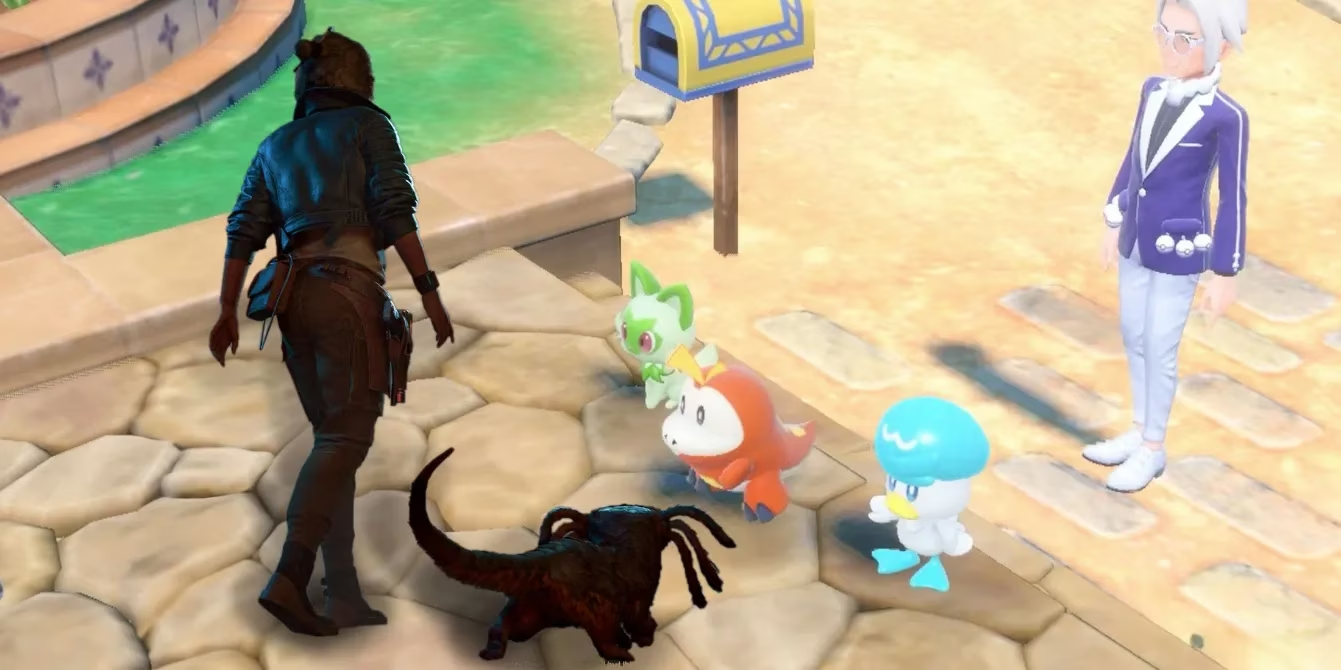
In the gritty underworld of Star Wars Outlaws, finding a decent meal is a small victory. I remember one particular mission on a dusty outpost planet. The tension was high, credits were low, and I was low on supplies. That's when Nix, my merqaal companion, perked up. His little nose twitched, and he took off down a narrow alley. Following him, I found a hidden food stall run by a Rodian chef, the air thick with the scent of spices I couldn't name. For a few credits, I bought a steaming bowl of whatever was simmering in the pot. Sitting on a crate with Nix at my feet, engaging in the simple quick-time event to share the meal, was a genuine moment of peace. The reward? A special "Nix Treat"—a tangible token of our bond.
These treats aren't just snacks; they're tactical tools. Back on the Trailblazer, I could place one in Nix's bowl, granting him a temporary new ability. Choosing which one felt like gearing up for a heist:
-
The Distraction Delight: Made Nix a master of misdirection, able to hold an enemy's attention for what felt like an eternity.
-
The Grenade Kicker: A personal favorite. Watching him punt a thermal detonator back at a group of stormtroopers never got old.
-
The Chaos Crunch: Enemies he pounced on would lose control, staggering around and creating perfect openings.
While none were strictly necessary to complete a job, they added a layer of fun and personality to every encounter. The hunt for new vendors and their unique planetary dishes became a side quest in itself, a delicious way to immerse myself in each world's culture.
Meanwhile, in the sun-drenched world of Pokémon Scarlet and Violet, my relationship with food was both more systematic and wonderfully chaotic. Every town boasted restaurants and food stalls, each with menus offering specific buffs. I'd often plan my route based on what I needed: a meal to boost my Egg Power before visiting a nursery, or a dish to increase my Catch Power before tackling a tricky Titan. The buffs were diverse and impactful:
| Buff Type | Primary Effect | My Typical Use Case |
|---|---|---|
| Egg Power | 🥚 Faster Egg collection | Mass breeding for perfect IVs |
| Catching Power | 🎣 Higher catch rate | Legendary hunts & Tera Raids |
| Raid Power | ⚔️ More rewards post-battle | Farming Herba Mystica |
| Sparkling Power | ✨ Increased Shiny odds | The endless, hopeful Shiny hunt |
But the real magic happened outside the restaurants. The picnic feature let me become a chef. I'd find a scenic spot—a flower field, a lakeside, a snowy peak—and lay out my blanket. From my bag, I'd pull out ingredients bought from markets or found on the ground: salty Herba Mystica, sweet strawberries, savory ham. Assembling a sandwich was a mini-game of balance and hope. The ingredients dictated the type and strength of the meal power, and a well-crafted sandwich could dramatically influence the types of Pokémon that appeared around me. A sweet-and-sour sandwich might fill the area with Fairy-types, while a spicy one would attract Fire-types. It was culinary exploration as gameplay, and it made the world feel alive and reactive.
Reflecting on it now, in 2026, I see how both games used food to build their worlds. In Outlaws, it grounded the high-stakes criminal life in relatable moments of respite and companionship with Nix. In Pokémon, it turned a basic buff system into a creative, player-driven activity that affected exploration. One isn't necessarily better than the other; they serve different purposes for their respective worlds. The shared philosophy is clear: food is more than fuel. It's a ritual, a reward, and a bridge between the player and the game's universe.
The success of these systems makes me excited for what's next. Will future RPGs feature intricate cooking minigames where the recipe you discover in an ancient tomb grants a unique legendary buff? Will survival games deepen their culinary mechanics beyond basic hunger meters? The way Star Wars Outlaws and Pokémon have woven food into their core loop proves that even the simplest human experiences—sharing a meal, cooking for friends—can become unforgettable interactive moments. My journey taught me that whether you're a scoundrel on the run or a Pokémon Champion on the rise, you should always take time to enjoy a good meal. The benefits, it turns out, are far more than just satisfying a hunger meter.