As the gaming industry continues to evolve, the year 2026 marks a significant departure from long-held conventions, with Star Wars Outlaws leading the charge. For years, the familiar chime of experience points, the incremental climb of level bars, and the sprawling branches of skill trees have defined player advancement across genres, from sprawling RPGs to tactical shooters. When whispers of a new Star Wars open-world adventure began to circulate, many anticipated another iteration of this well-worn path. Yet, Ubisoft's vision for Star Wars Outlaws shattered those expectations, presenting a galaxy where growth is not measured in abstract numbers but woven directly into the fabric of exploration and personal connection.
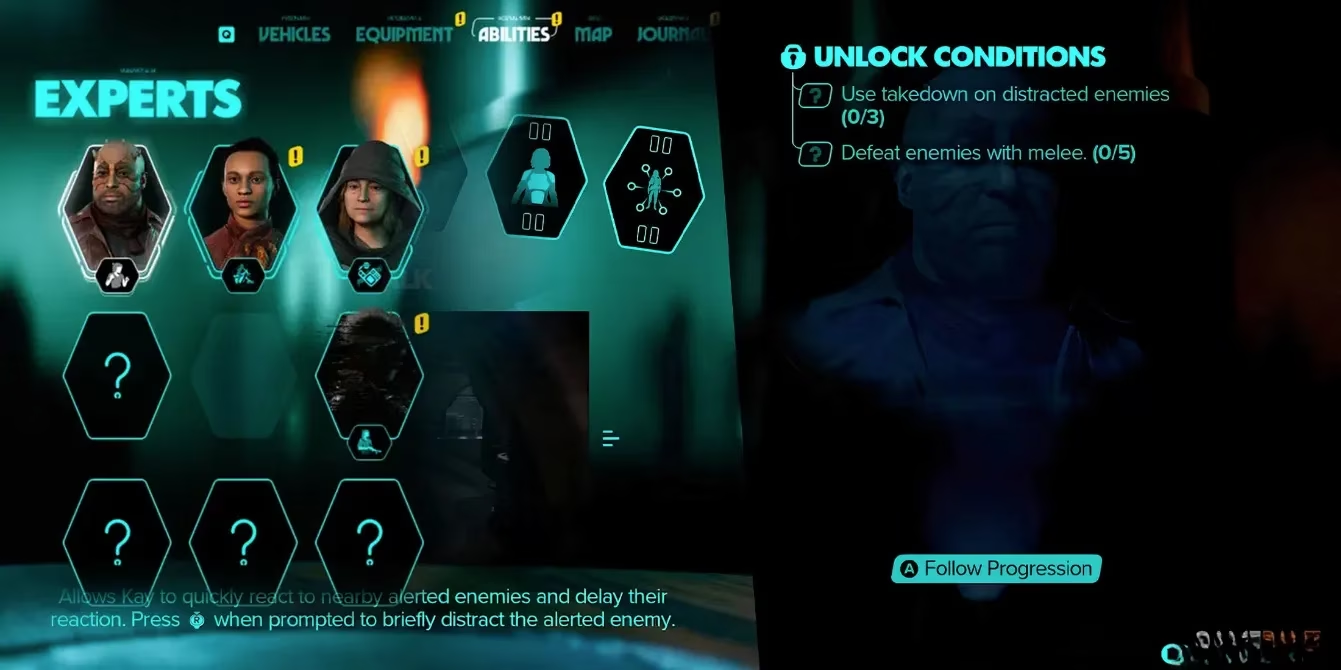
Rather than tethering the protagonist, Kay Vess, to a traditional leveling grind, the game unfolds a more organic tapestry of empowerment. The galaxy itself becomes the ultimate mentor. Scattered among the stars are nine distinct experts, each a master of their craft, waiting to be discovered not through menus, but through whispers and clues found in the world—what the game terms 'Expert Intel'. Finding them is only the beginning of the journey, not its reward.
☀️ A Quest for Knowledge, Not Just Points
Upon locating an expert, players are not greeted with a simple transaction. Instead, they are presented with a personal quest, a narrative thread that must be unraveled. Completing this initial task is an act of proving one's worth, earning the expert's trust and, as a gesture of goodwill, a single free ability. This moment transforms progression from a passive accumulation into an active, story-driven pursuit. The remaining five abilities each expert holds are not locked behind a level gate but behind specific, thematic challenges. One might require mastering a particular combat technique against imperial patrols, while another could task the player with navigating treacherous asteroid fields with their speeder. The difficulty scales, but the goal is always clear, tangible, and deeply integrated into the life of an outlaw.
🛠️ The Familiar and the Revolutionary
This does not mean Outlaws abandons all familiar systems. A classic workbench exists, a haven of sparks and circuitry where Kay's trusty blaster can be meticulously enhanced. Gathering salvage and rare components allows for module upgrades that tangibly alter combat dynamics—increasing fire rate, improving stability, or adding specialized modifications. This system provides a comforting anchor of predictability amidst the novel progression seas. However, it is the expert system that forms the soul of Kay's development. The skills they offer run the expected gamut: bolstering health reserves, refining combat prowess, enhancing speeder handling, and expanding precious inventory space. Yet, the method of acquisition elevates them from mere checkboxes on a skill tree to hard-earned badges of experience.
This design philosophy feels like a direct, poetic response to player fatigue. The repetitive grind that plagued certain titles of the late 2010s and early 2020s, where advancement could feel like a chore separating the player from the story, has been thoughtfully excised. In its place is a system that makes the galaxy feel astonishingly alive. Power is no longer an internal statistic that magically increases; it is a reputation earned, a favor granted, a lesson learned from a character who has a name, a face, and a story. Players must seek out these mentors, engage with their worlds, and complete tasks that often feel less like grinding and more like living the life of a scoundrel on the fringe.
Why This System Resonates in 2026:
-
Narrative Integration: Abilities are gifts with context, making each upgrade a memorable story beat.
-
Exploration Incentive: The drive to find experts naturally pushes players to every corner of the map.
-
Player Agency: Choices matter not just in which skill to pick, but in which expert to seek out and befriend first.
-
Elimination of Grind: Progress is tied to varied, engaging activities rather than repetitive enemy farming.
The impact of this design extends far beyond the borders of the Star Wars universe. It serves as a beacon for the industry, demonstrating that player progression can be a pillar of world-building and immersion rather than a separate meta-game. Other studios would be wise to take inspiration, not necessarily to clone the system, but to embrace its core principle: tether advancement to the game's world and its inhabitants. Imagine a fantasy RPG where magical spells are learned not from scrolls in a menu, but from ancient spirits found in forgotten groves, each requiring a unique ritual. Envision a cyberpunk thriller where hacking protocols are acquired not with skill chips, but by completing jobs for elusive netrunners in the city's underbelly.
Star Wars Outlaws has delivered the expansive, lived-in galaxy fans dreamed of, and its bold reimagining of progression is a significant part of that achievement. It proves that moving away from the comfort of the XP bar can create a more rewarding, personal, and ultimately more heroic journey. In a galaxy far, far away, Kay Vess grows stronger not by watching numbers rise, but by leaving her mark on the world and the people in it—a lesson the entire gaming world is now learning.