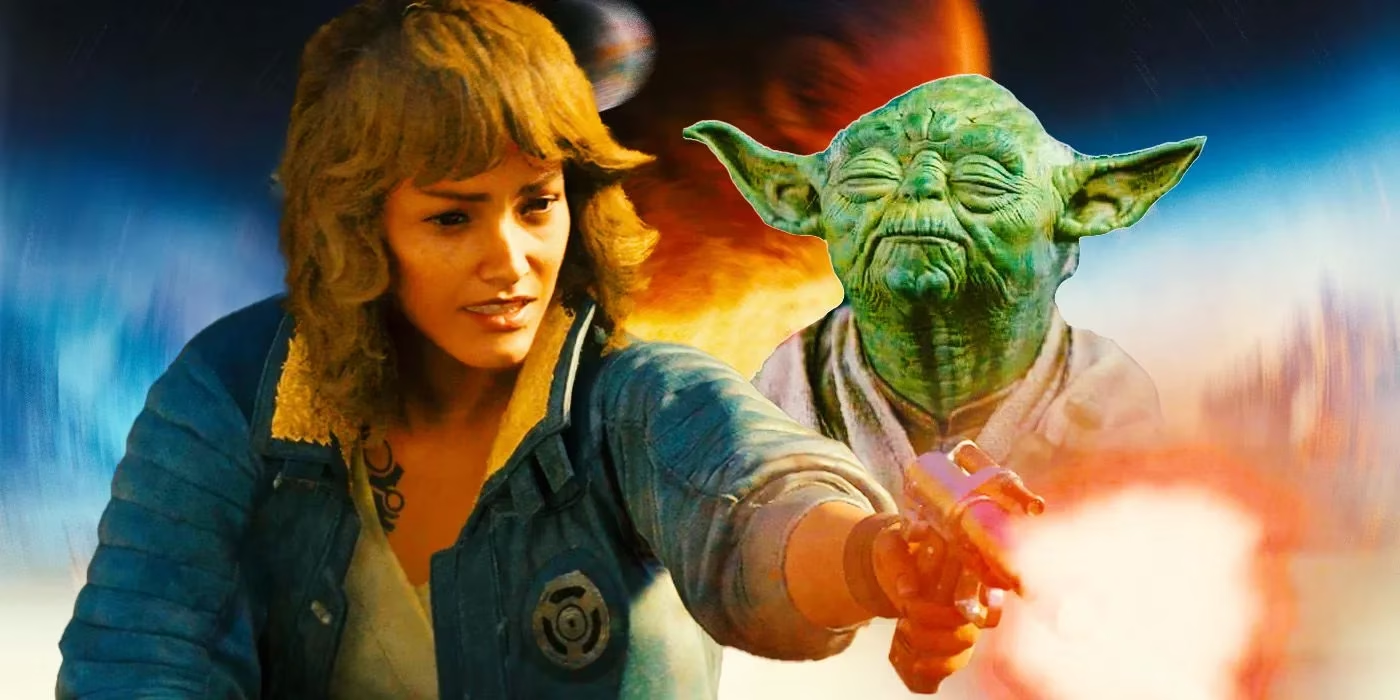
A major departure from typical Star Wars experiences, Star Wars Outlaws presents a protagonist who operates firmly outside the Jedi tradition. Kay Vess, an opportunist navigating the criminal underworld between The Empire Strikes Back and Return of the Jedi, begins her journey with priorities centered on accumulating credits rather than challenging the Galactic Empire. While not portrayed as cold-blooded—the game offers numerous moments for petting creatures and assisting others—Kay's interests are far removed from upholding any galactic order. Her story, developed by Massive Entertainment and published by Ubisoft in partnership with Lucasfilm Games, unfolds across various planets as she seeks a better life with her companion Nix, all while evading both Crime Syndicates and Imperial forces.
Stealing forms a consistent thread throughout Kay's gameplay loop. The galaxy is littered with valuables left on tables or secured in chests requiring lockpicking skills. Pawning these items represents, alongside occasional luck at the Sabacc table, the primary method for funding upgrades. For the most part, theft in Star Wars Outlaws is straightforward and accessible, aligning with Kay's scoundrel persona. However, the game imposes surprising restrictions in situations that seem like obvious opportunities for larceny, creating a curious dissonance in her character portrayal.
🚀 The Curious Case of the Untouchable Speeders
Perhaps the most notable limitation involves vehicular theft. The worlds of Star Wars Outlaws are brimming with parked and unattended speeders, yet players cannot simply hop on and take them for a joyride. Instead, ground transportation revolves exclusively around Kay's personal speeder bike, which can be summoned in typical video game mount fashion. While her vehicle reliably handles transportation needs, this restriction feels unnecessarily confining, eliminating potential spontaneity and limiting player agency in an otherwise expansive open-world setting.
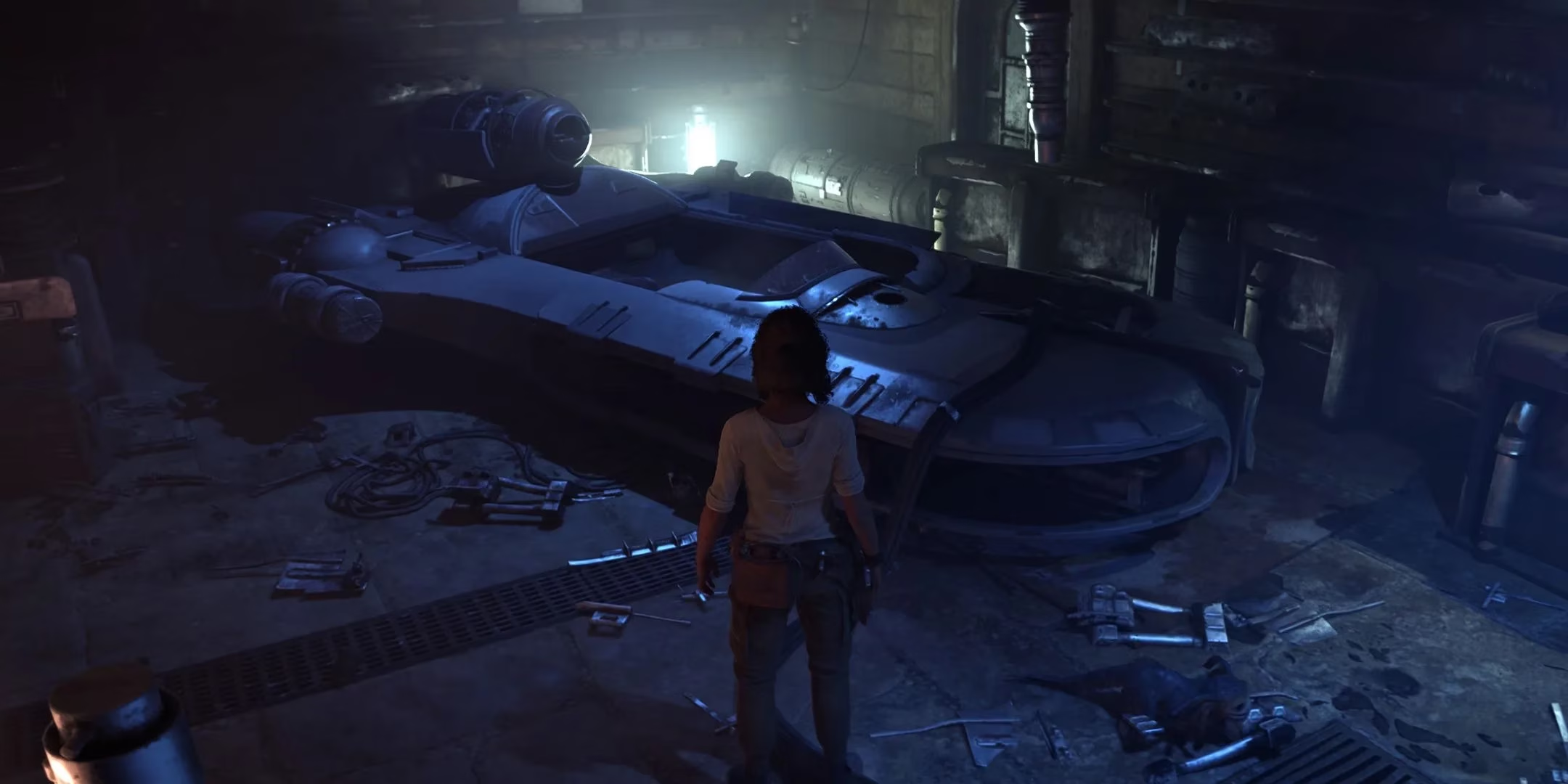
This omission becomes particularly striking when contrasted with the broader Star Wars universe, where even the Jedi—paragons of order—frequently commandeer vehicles without hesitation. Key cinematic moments highlight this contrast:
-
Anakin Skywalker's heroic debut in The Phantom Menace originates from illicitly piloting an N-1 Starfighter.
-
During the Coruscant chase in Attack of the Clones, Anakin appropriates a speeder, an action his master Obi-Wan Kenobi doesn't question when joining him moments later.
Given that Kay operates in "a galaxy of scum and villainy," her self-imposed higher standard regarding vehicle theft seems bizarre, especially compared to Jedi conduct during the Republic's final years. This restraint creates an intriguing character contradiction: a scoundrel who draws ethical lines in unexpected places.
🎮 Gameplay Boundaries in an Open Galaxy
While comparisons to a spacefaring Grand Theft Auto are tempting, the absence of casual vehicle theft immediately distinguishes Star Wars Outlaws from pure sandbox experiences. The game generally lacks anarchic sandbox impulses, focusing instead on reasonably linear stealth missions and side content that guides Kay between objectives. There's merit in this focused design approach, but certain limitations feel arbitrary rather than intentional. The game could benefit from loosening some restrictions to enhance player immersion and world interaction.
Further complicating the speeder experience are combat limitations. Kay's ability to use her blaster while riding is severely restricted—there's no option for casual firing. Instead, players must enter a slow-motion mode to select multiple targets, disrupting combat flow. Combined with the speeder's tendency to halt violently at minor environmental obstacles, these design choices prevent the vehicular gameplay from achieving the dynamic, fluid traversal that the Star Wars universe promises.
⚖️ Balancing Character and Gameplay
It's understandable that Star Wars Outlaws doesn't fully embrace the chaotic freedom of titles like Grand Theft Auto. The game carves its own identity within the action-adventure genre, earning a respectable 8/10 score from critics and 7.5/10 from users. However, the specific restriction on speeder theft creates narrative and gameplay inconsistencies worth examining.
| Aspect | In-Game Reality | Expected Scoundrel Behavior |
|---|---|---|
| Vehicle Acquisition | Summons only personal speeder | Steal any unattended vehicle |
| Combat on Speeder | Restricted slow-motion mode | Free-aim blaster combat |
| Moral Flexibility | Steals items but not vehicles | Utilizes all available resources |
Kay's unusual loyalty to her own vehicle suggests either:
-
Character Depth: Perhaps she maintains this one principle as a connection to her past or personal identity.
-
Gameplay Simplification: The developers may have prioritized balanced mechanics over full simulation.
-
Technical Constraints: Creating fully interactive civilian vehicles might have exceeded development resources.
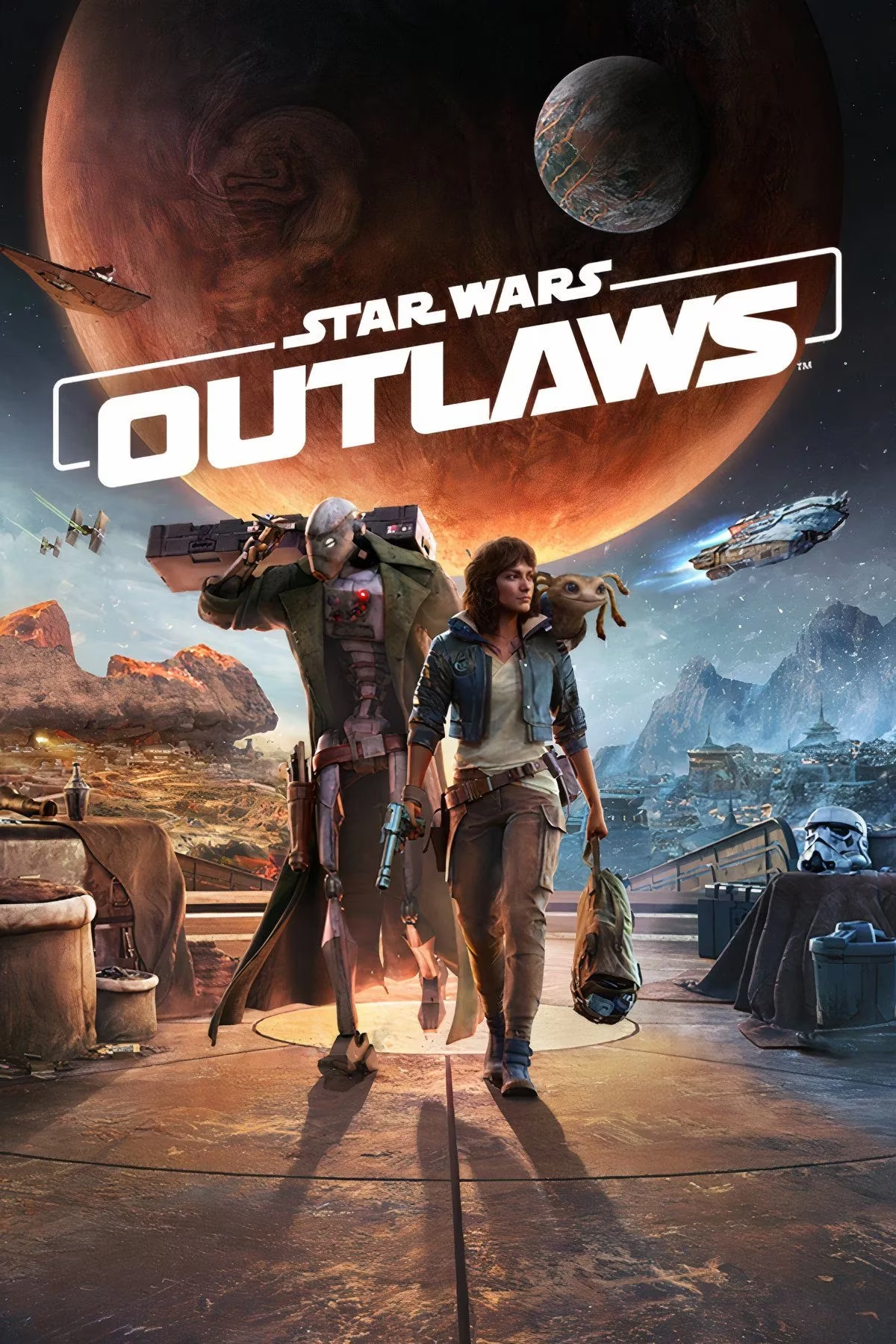
The game's ESRB T rating (for Violence, Simulated Gambling, and Mild Language) already accommodates criminal behavior, making the speeder restriction more puzzling. In a universe where smuggling and theft are central themes, this particular boundary stands out as an anomaly. As players navigate various landscapes and outsmart both syndicates and the Empire, they might wonder why Kay—who otherwise embraces opportunistic theft—draws the line at speeder borrowing.
🌟 The Bigger Picture
Ultimately, Star Wars Outlaws succeeds in delivering a fresh perspective within the franchise, focusing on the criminal underworld rather than Jedi-Sith conflicts. Kay Vess represents a different kind of Star Wars protagonist—one motivated by survival and profit rather than cosmic destiny. Her selective morality, including the puzzling speeder restriction, adds complexity to her character, even if it occasionally strains gameplay logic.
The game's approach reflects a deliberate design philosophy prioritizing curated experiences over pure sandbox freedom. While this choice may disappoint players seeking complete anarchic freedom, it creates a more structured narrative journey. As the gaming landscape continues to evolve through 2026, Star Wars Outlaws stands as an interesting case study in balancing character consistency with player expectations in open-world design.
Key takeaways from Kay Vess's unusual restraint:
-
Character Consistency: Even scoundrels have personal codes, however inexplicable they may seem.
-
Gameplay Focus: Restrictions can direct attention toward intended gameplay loops.
-
Narrative Tension: Contradictions between character actions and setting expectations can spark player engagement.
-
Franchise Expansion: The Star Wars universe benefits from exploring diverse moral perspectives beyond the Jedi-Sith binary.
In the final analysis, Kay's refusal to steal speeders remains one of Star Wars Outlaws' most curious design choices—a restriction that simultaneously defines and confines her character in a galaxy where survival often requires flexibility. This peculiar principle, whether viewed as character depth or gameplay limitation, ultimately contributes to what makes Kay Vess a memorable addition to the Star Wars pantheon.