I have to open with a confession: I have spent an unreasonable number of hours playing Kessel Sabacc, and I regret none of them. 🎴 The card game Ubisoft Massive invented for Star Wars Outlaws is genuinely, dangerously moreish — a four-player mashup of Blackjack and Poker where you chase the lowest possible pair across three rounds, burning tokens to draw new cards and paying a penalty for anything but first place. Run out of tokens and you're out. Last scoundrel standing takes the pot. It's the single best thing in this entire game, and I could play it all day.
Which is exactly the problem, because everything wrapped around that card table left me cold.
The Great Un-Cluttering
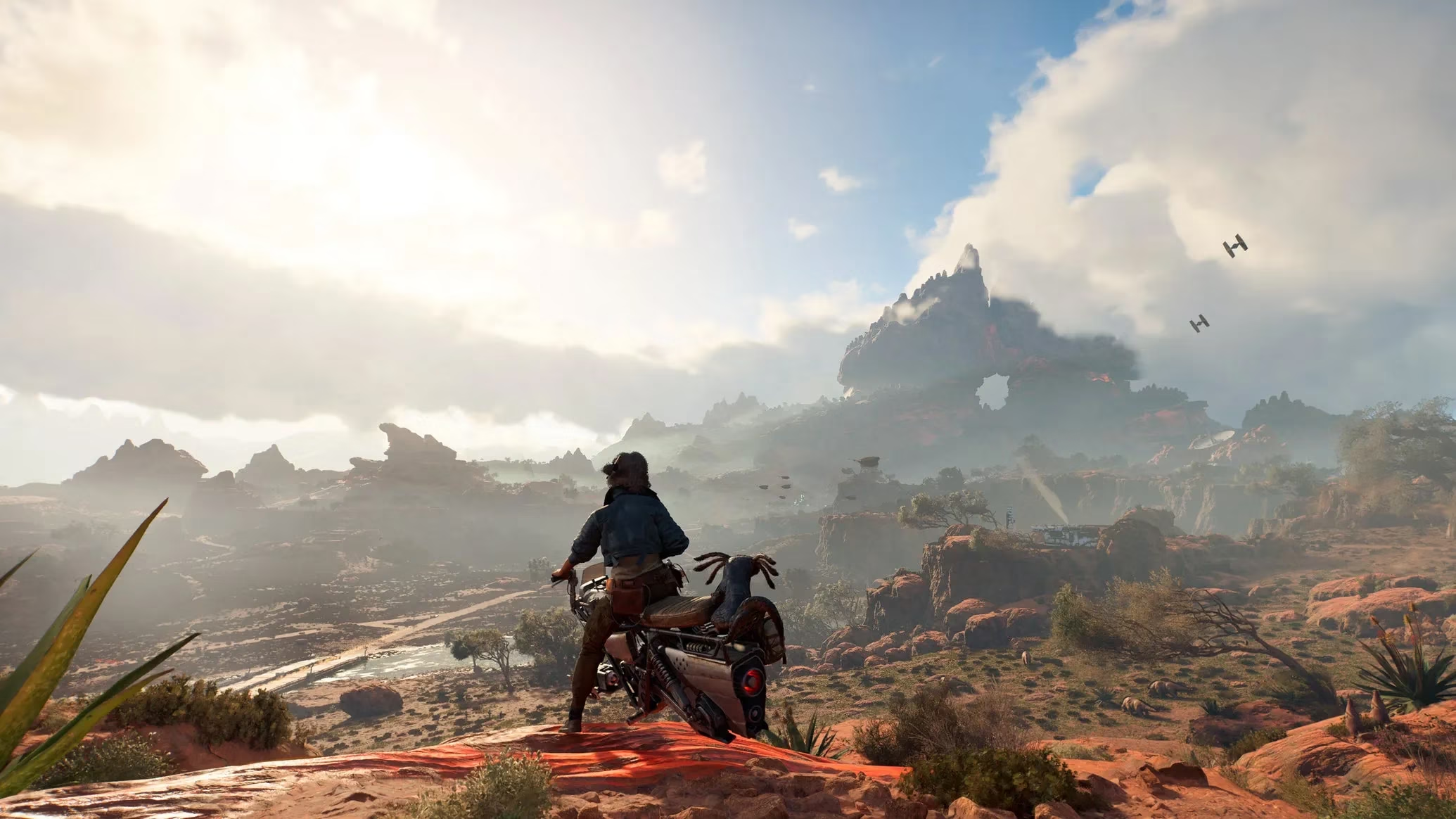
Here's the strange thing about Outlaws. Its biggest failure isn't that it leans too hard into the familiar Ubisoft open-world formula — it's that it strips that formula away and finds almost nothing underneath. It's not peeling wallpaper to reveal brickwork. It's lifting the carpet and finding a hole in the floor.
And look, I get the instinct. In 2026 we're all exhausted by map icons and towers. But those systems exist for a reason: they weave together into something intoxicating, pulling you from looting to crafting to combat to unlocking the next region without you ever noticing the seams. Remove the clutter and the flow disappears with it.
Does that mean clutter is inherently good? No. It means you have to replace it with something better, and Outlaws mostly doesn't.
Exploration: All Yellow Paint, No Discovery
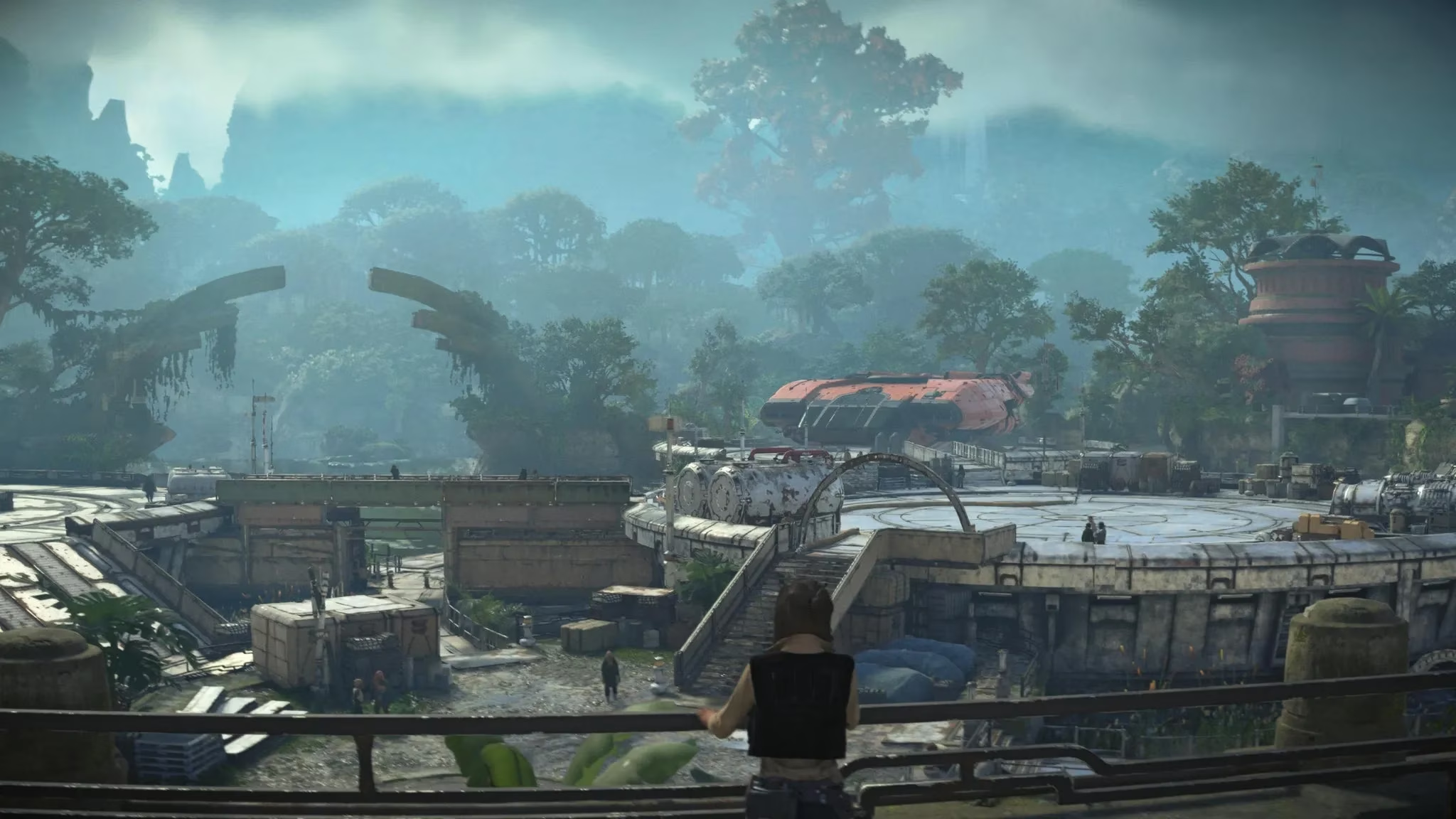
I wanted to love exploring Toshara, Kijimi, Akiva and the obligatory Tatooine. The pitch is lovely: no towers, no fog of war, regions revealed fully on arrival. A gateway open world aimed at a younger, broader Star Wars audience. Admirable!
In practice, platforming here is dire. The yellow paint is the most egregious I've seen in a modern game — yellow tubes on the floor, yellow arrows on white placards pointing at larger yellow paint, button prompts clinging to every ledge and grapple point. Yes, you can turn it off. I found the toggle embarrassingly late, and switching it off only revealed a deeper issue: the world simply isn't readable without it. Ledges I could scramble up are half the height of ones I can't.
Then there's the repetition. How many rhythmically rotating wall fans does one galaxy need? Two puzzle types — a timing-based lockpick and a Star Wars Wordle slicing minigame — carry the entire runtime. Both are charming the first time. By the hundredth, I was mashing symbols on autopilot.
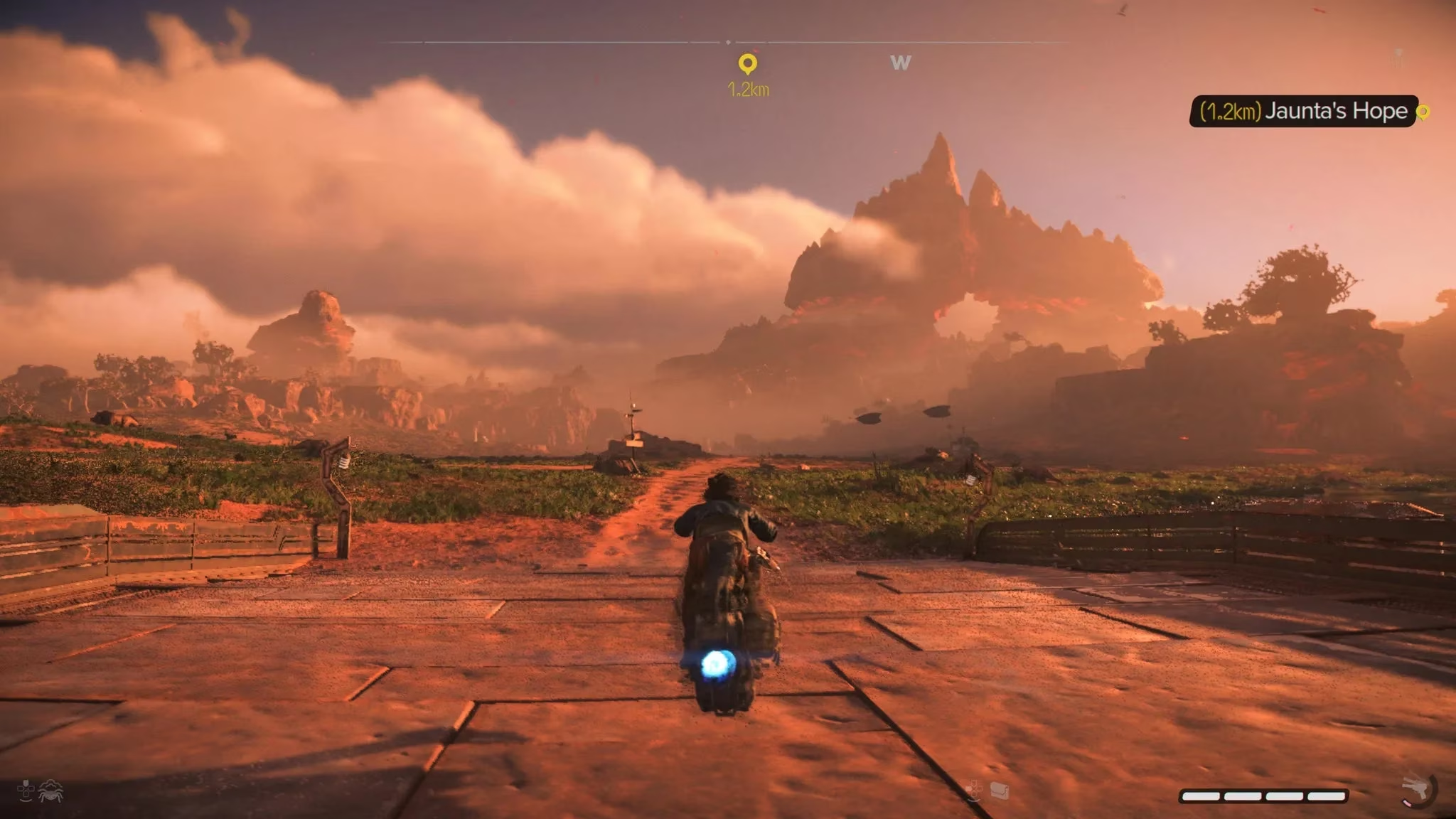
And the speeder. Oh, the speeder. 🚀 It's a nightmare to pilot, slamming to comically blunt standstills on near-invisible bumps, and its sheer speed forced Massive to spread the landscape so thin that it's unwalkable and unfun to ride. As Dragon's Dogma 2's director once put it, travel is only boring when your game is boring. That line lives rent-free in my head now.
Stealth, Combat and the Illusion of Choice
Stealth should be the heart of a scoundrel story. Instead it's painfully basic — easy to cheese, yet easy to fumble thanks to awkward controls. Enemy AI is a joke by 2026 standards: guards investigate a crumpled body for roughly ten seconds before shrugging and returning to wall-staring duty. Their sightlines are comically narrow. I routinely beat someone to death a few metres from their colleague with zero reaction.
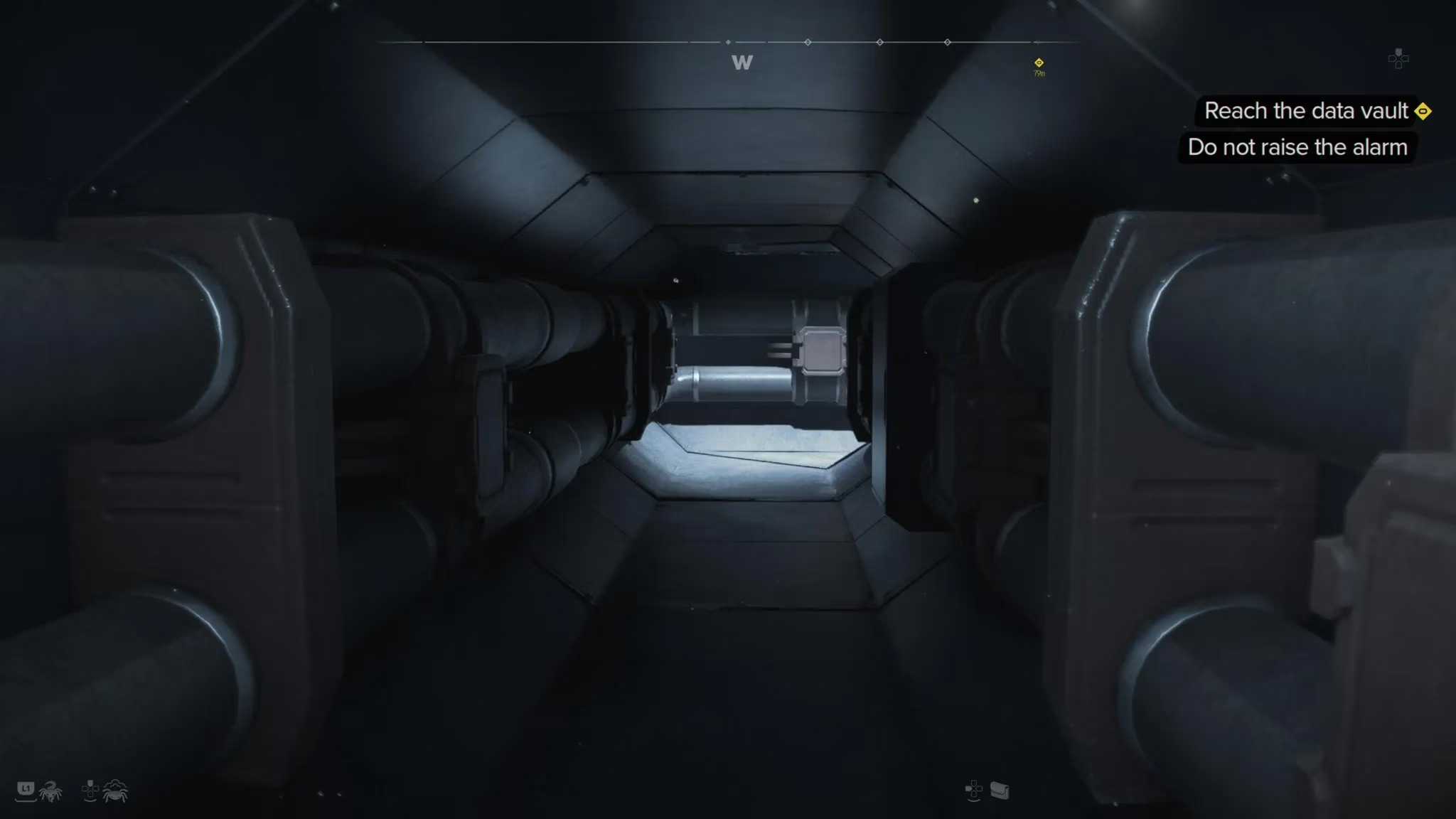
Nix, Kay's adorable companion, is the real star — sabotaging alarms, distracting troopers, chewing on helmets. But most encounters collapse into the same loop: send Nix, walk up, press Square, repeat for thirty minutes. Air vents, countless air vents, are usually the single linear path rather than a branching opportunity.
Gunfights are better. The blaster's stun-mode rotation and pseudo-grenade upgrade make for breezy, casual fun in short bursts — fitting for a Han Solo template, though it drifts toward wafty chaos rather than stylish intent.
The Syndicate System Is a Lie
Much was made of the four crime syndicates — Pykes, Hutts, Crimson Dawn, Ashiga Clan. In reality it's a like/dislike bar with almost no teeth:
| What's promised | What you actually get |
|---|---|
| Factional consequences | Better or worse trader prices |
| Story divergence | None that I could detect |
| Character growth | Absolutely zero |
Binary choices at mission's end always land on the same dated moral equivocation, and Kay herself never changes. She starts cocky and scrappy, ends cocky and scrappy, unmoved by anyone or anything. Why does she want the big score? What does she care about? The game never answers, because it confused an archetype — scoundrel — with an actual character.
A Heist With No Heist
This is a heist story. So where are the slatted blinds, the half-shadowed faces, the tests of loyalty? When I finally met a duplicitous contact, I got a flat, over-the-shoulder chat in a boring corridor. The vibes are there — neon, cocky shrugs, rip-roaring music — but the texture isn't. And in a post-Andor galaxy, that gap is brutal.
Since launch, patches and expansions have smoothed some rough edges, and the Sabacc table keeps pulling me back. But the core critique stands: Outlaws lacks Arkham's branching stealth, Dishonored's systemic freedom, Assassin's Creed's lethal rhythm, Uncharted's charisma, Horizon's animation flow.
So here's my verdict after all this time. 🎴 Play it for Kessel Sabacc. Play it for Nix. Just don't expect the galaxy around them to hold up its end of the bargain.