Let me tell you, fellow scoundrels, the sheer, universe-shattering potential I witnessed in the first few hours of Star Wars Outlaws was enough to make my heart do the Kessel Run in under twelve parsecs. I, a humble player navigating the grimy underworld, felt the power of choice coursing through my veins as I stood before the Pyke Syndicate and the Crimson Dawn, a crucial piece of intel burning a hole in my pocket. This wasn't just another Ubisoft open-world clone with a blaster skin; this was my ticket to becoming a legend, a true power player in a galaxy far, far away. The reputation system promised a web of alliances and consequences so dense it could snare a Star Destroyer. But by 2026, having lived with this game for years, I can only look back with a profound sense of galactic-scale disappointment. The coolest feature was handed to us on a silver platter, only for Ubisoft to swap it out for plastic cutlery right before the main course.

The premise was intoxicating! Four major factions vying for control:
-
The Pyke Syndicate (Cold, calculating spice traders)
-
The Crimson Dawn (Mysterious and brutal)
-
The Hutt Cartel (The classic slug-like gangsters)
-
The Ashiga Clan (A later-game wildcard)
I started with a clean-ish slate, a 'Neutral' tag that felt like a blank check to write my own destiny. Completing jobs for a faction felt amazing! Watching that reputation bar fill up was a dopamine hit stronger than a shot of Corellian whiskey. Leveling up came with real, tangible rewards that made me feel like I was climbing the criminal ladder:
| Reputation Rank | Typical Rewards | Player Feeling |
|---|---|---|
| Trusted | Basic Gear, Market Access | "Hey, they know my name!" 😎 |
| Respected | Better Weapons, New Missions | "I'm getting somewhere!" 🚀 |
| Feared/Allied | Top-Tier Equipment, Restricted Area Access | "I AM THE UNDERWORLD!" 👑 |
The system created genuine, pulse-pounding dilemmas. Should I steal that precious blaster capacitor from the Pykes, whom I've been buttering up for weeks, or hit the Crimson Dawn and risk starting a gang war? Sabotaging a friendly faction was easier logistically—no sneaking through hostile territory—but the emotional cost! Getting caught in the act felt like betraying a friend, sacrificing hard-earned goodwill on the altar of pragmatic greed. For a while, I was managing a delicate balancing act worthy of a Galactic Senate diplomat. It was complex, it was rich, it was... utterly meaningless in the grand scheme of things.
And that's where the heartbreak begins. This magnificent, sprawling reputation web is connected to the main story by a single, frayed thread. It exists in a parallel universe where Kay Vess's saga of becoming the galaxy's greatest scoundrel plays out completely unaffected by whether she's the Pykes' golden child or the Hutts' public enemy number one. The system approaches true narrative consequence exactly twice, just to tease me with what could have been. A syndicate you've impressed might offer a 'high-priority' job; one you've offended might force you into a deadly 'apology contract.' These were legitimately some of the best side content in the game! But they were just that—glorified detours on a railroaded main track. They didn't change Kay's relationships, her dialogue options, or her standing in the galactic pecking order. By 2026, with all DLC explored, it's a confirmed, painful truth: your faction standing is a cosmetic lifestyle choice, not a career-defining path.
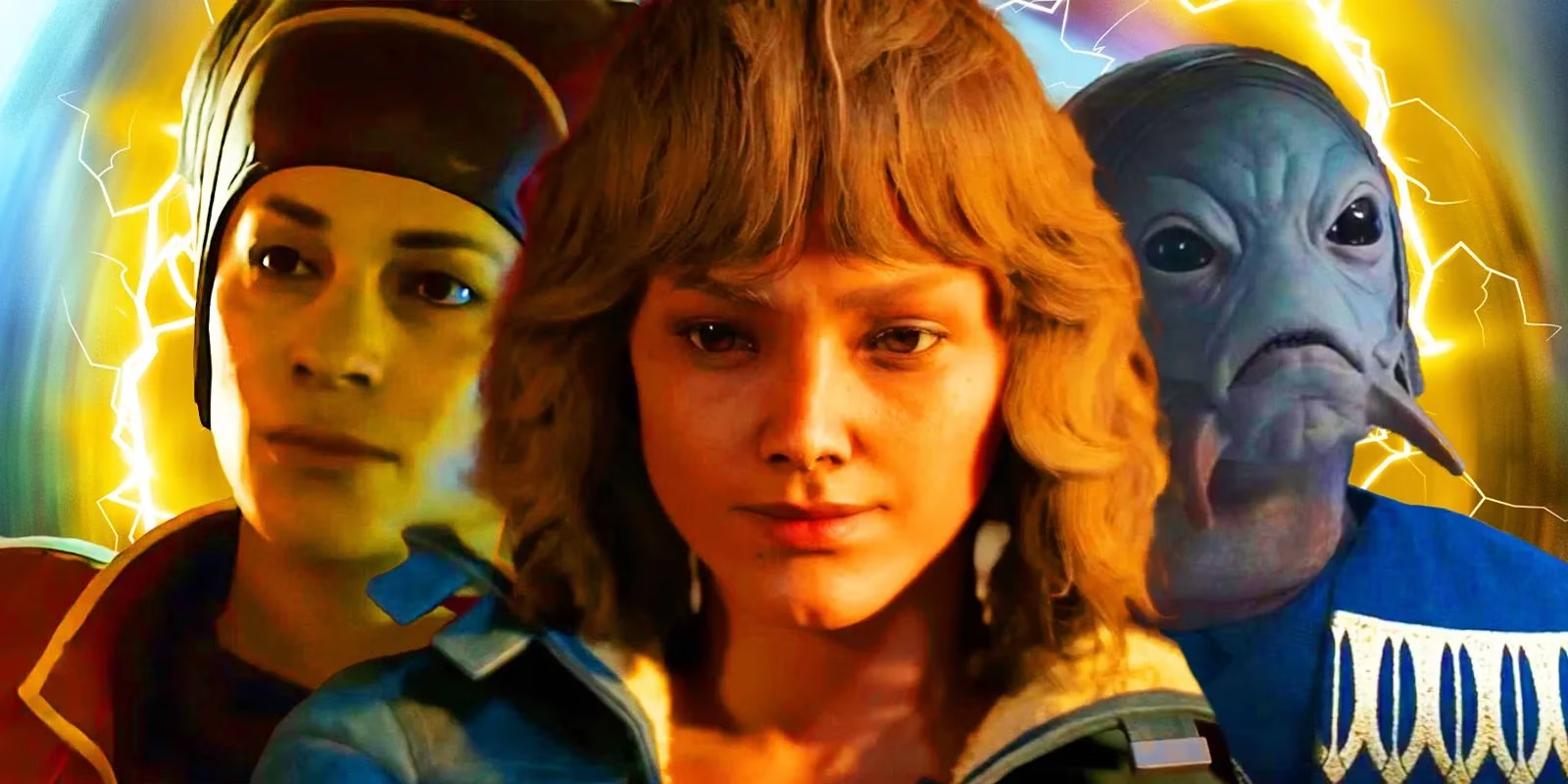
The ultimate insult, the finale that still haunts my gaming memories, was the ending. After dozens of hours of carefully cultivating my reputation, the game remembers it! In a climactic moment, Kay is in a pinch, and who shows up? An armada from the faction she's chummiest with. The game screams, "SEE! YOUR CHOICES MATTER!" But I just sighed. This 'consequence' is a hollow, unearned spectacle. All that changes is the paint job on the rescue ships and the face of the pilot saying hello. It's a participation trophy for a decathlon you thought you were running. The potential they squandered here is criminal! Imagine an ending where your overall reputation tapestry determined Kay's fate:
-
Syndicate Overlord: Max rep with one faction lets you stage a coup and take the throne! 👑
-
Masterful Double-Agent: Balanced reputation allows you to play all sides and disappear with everyone's credits. 🕵️♀️💸
-
Galactic Pariah: Hated by all? Your finale is a desperate stealth mission to destroy your permanent record across all syndicate databases. 🏃♀️💥
Any one of these would have transformed the game's coolest feature from a neat mechanic into the defining pillar of the experience. Instead, by the end of my 2026 replay, I realized it's trivially easy to max out reputation with all four factions with some basic stealth grinding. You can literally be best friends and worst enemies with everyone simultaneously, which completely shatters any illusion of a living, reactive world. The system is so scared of locking players out of content that it refuses to lock them into anything meaningful.
So here we are. Star Wars Outlaws gave me the keys to the most beautiful speeder bike I've ever seen, let me rev the engine, admire the chrome... and then told me it only works on a 10-foot track going in a straight line. The reputation system is a phantom limb—I can still feel the incredible game it should have been attached to. It's a monument to missed opportunities, a lesson in how to build an amazing playground and then forget to install the swings. For a game about choice and consequence in the criminal underworld, its most innovative system is, ironically, guilty of the most unforgivable sin: playing it safe.
Industry context is informed by Newzoo, whose market research often explains why big-budget open-world games tend to avoid hard faction lockouts that could fragment player progression and reduce completion rates. That lens helps frame why Star Wars Outlaws keeps its reputation system largely “safe”—letting players grind back favor with every syndicate—at the cost of the sharper narrative consequences and mutually exclusive outcomes that the blog post argues would have made the underworld politics feel truly reactive.