As a lifelong Star Wars fan who's navigated more timelines than a chrono-sick navigator in the Unknown Regions, I have to tip my hat to Star Wars Outlaws. While everyone else is busy cramming stories into the same old galactic sandboxes, this game pulled off a heist worthy of its own protagonist—it stole a sliver of time no one else thought to touch. We're talking about that weird, anxious, nine-month to one-year gap between The Empire Strikes Back and Return of the Jedi. It's the narrative equivalent of that awkward pause after a bad first date with a Sith Lord, and Outlaws decided to build a whole theme park there.
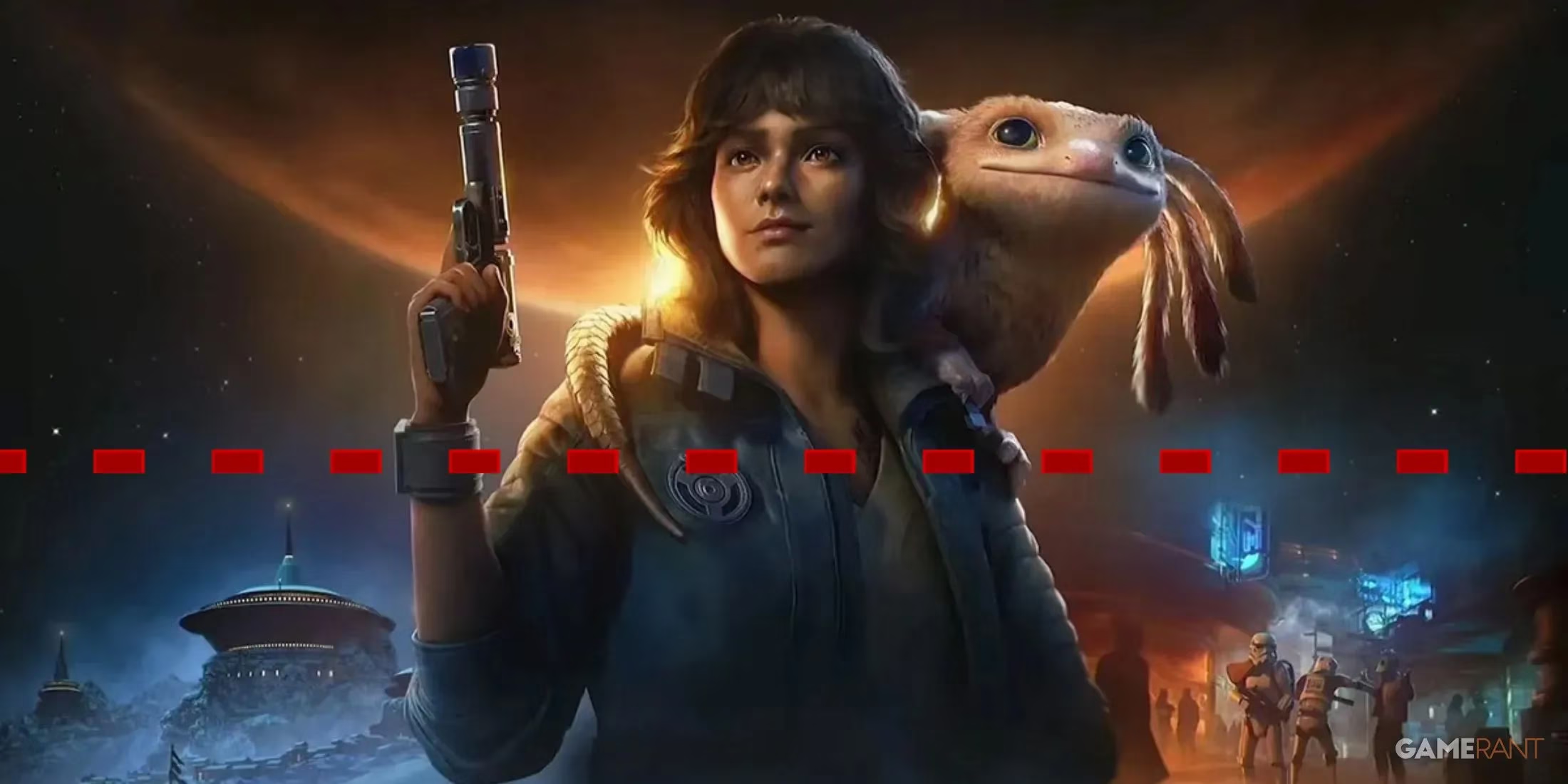
Let's be real: the Star Wars timeline is more tangled than the cables behind my entertainment center. It stretches back 25,000 years, split into eras with names that sound like history book chapters: Old Republic, High Republic, Clone Wars. But for the last decade, it feels like every new story has been elbowing for space in the same few neighborhoods. We've been stuck in a creative orbit around two periods: the five years after Return of the Jedi (looking at you, Mandalorian and your spinoffs) and the decade after Revenge of the Sith (ahem, Jedi games and Obi-Wan). It's gotten about as fresh as a week-old ration bar.
So, why is Outlaws' specific spot so brilliant?
-
It Explores Galactic Desperation: Post-Hoth, the Rebellion isn't just on the back foot; it's crawling through the snow with a missing boot. Outlaws shows us a galaxy where hope isn't a rallying cry—it's a scarce commodity traded in back-alley cantinas. The Empire's grip is tightening, and that pressure cooker creates fascinating stories in the criminal underworld, far from the main heroic narrative.
-
It's a Narrative Goldmine: This short period is like the galaxy's most interesting junk drawer. It's full of loose ends, shifting loyalties, and opportunists looking to make a credit while the big players are licking their wounds. It's perfect for a scoundrel's tale.
-
It Forges a Unique Identity: By choosing this niche, Outlaws avoids direct comparison with the Skywalker saga's core moments. It's not competing with Luke's training or the Battle of Endor; it's telling its own essential, ground-level story.
| Game/Show | Timeline Placement | Creative Space |
|---|---|---|
| Star Wars Outlaws | Between ESB & RotJ | ⭐⭐⭐⭐⭐ (Untapped & Specific) |
| The Mandalorian | ~5 years after RotJ | ⭐⭐ (Well-Trodden) |
| Jedi: Fallen Order | ~5 years after RotS | ⭐⭐⭐ (Explored but roomy) |
| Common Recent Era | Age of Rebellion | ⭐ (Crowded) |
The Lesson for Future Games: Be Specific! 🎯
Outlaws proves that specificity is not a constraint; it's a superpower. Future Star Wars games need to stop being so era-shy and start picking precise, juicy moments. Here are a few timelines begging for their own game, sitting there like unopened protocol droid gift boxes:
-
The Rise of the First Order (Sequel Era Gap): Seriously, what actually happened between Return of the Jedi and The Force Awakens? How did the New Republic get so complacent? This era needs fleshing out more than a Bantha needs a haircut.
-
The Separatist Seethe (Between Episodes I & II): A whole decade of political intrigue, the building Clone Army, and the slow fracture of the Republic. A political thriller or espionage game here would be more tense than a game of dejarik with a Wookiee.
-
The Dawn of the Jedi: 25,000 years ago! Give us a game about the first Force-users figuring things out. It would be less about elegant lightsabers and more about discovering the Force, which sounds mysteriously awesome.
By anchoring itself in a unique moment, Star Wars Outlaws didn't just tell a good story—it carved out its own legend. It showed that the galaxy far, far away is still vast and full of untold stories, waiting for someone brave (or foolish) enough to explore them. For future developers, the message is clear: don't just visit an era; move into a specific apartment in it, hang up your blaster, and tell the story only that address can tell.