As any seasoned gamer knows, the familiar can sometimes be the biggest trap. In 2026, it's time to ask: why does Star Wars keep dragging us back to the same old sandbox? The recent release of Star Wars Outlaws proved that the galaxy far, far away is vast and full of potential, yet one planet continues to hog the spotlight. It's not about hating the sand—it's coarse and rough and gets everywhere—it's about questioning why this particular patch of emptiness is treated as a destination, when its entire narrative purpose has always been to be left behind.
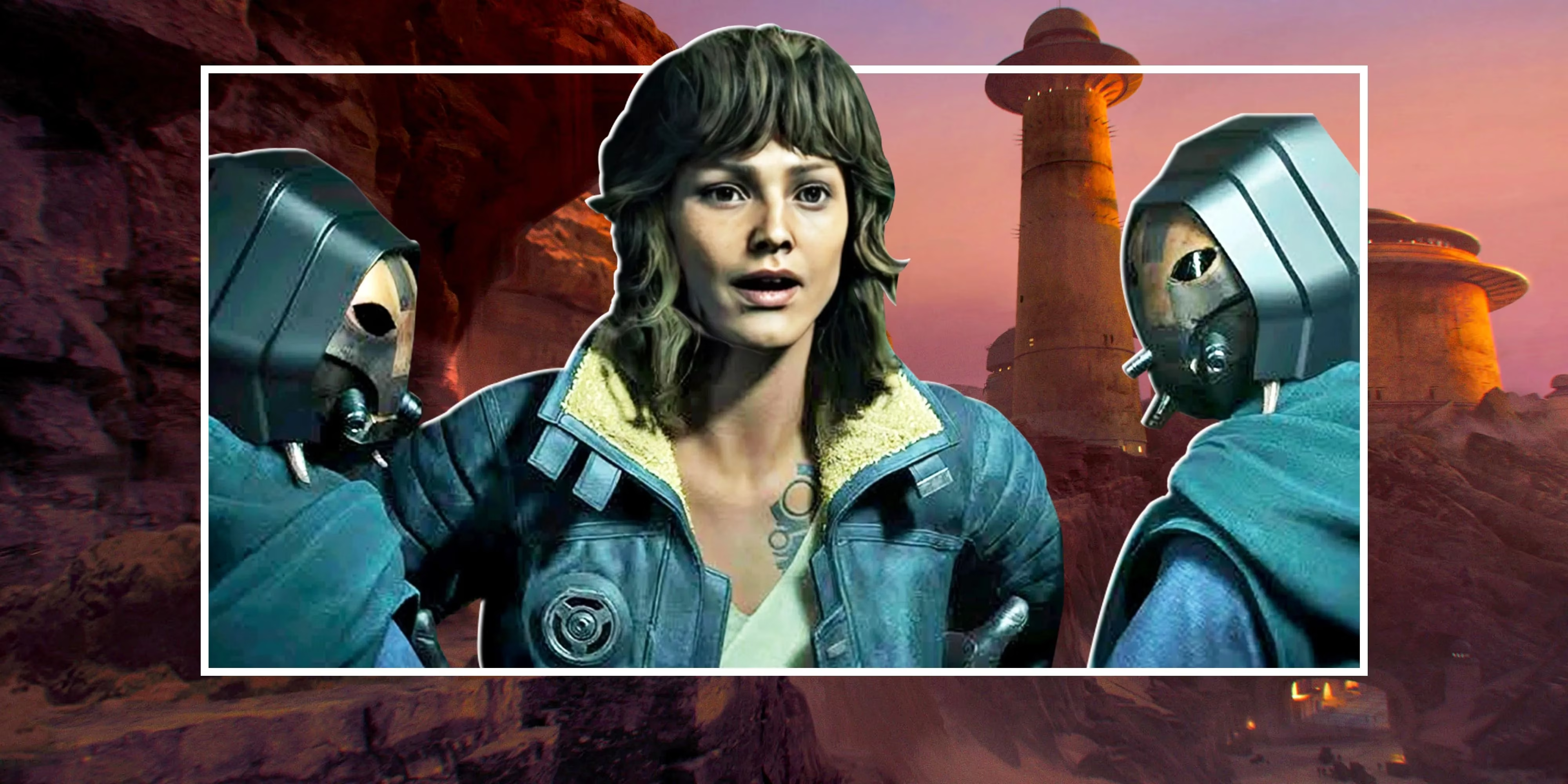
From a game design perspective, a desert planet is a challenging canvas. Jungles overflow with life, puzzles, and verticality. Cities buzz with quests, vendors, and dense stories. But a desert? It's largely defined by its emptiness. In Star Wars Outlaws, this translates to a zone perfect for high-speed, carefree swoop bike rides—a place to enjoy the sensation of unhindered movement. It's a zone where you don't have to worry about constantly bumping into obstacles. But is that enough? When Outlaws offered the vibrant, red-soiled moon of Toshara with its flowing rivers and bustling cities, it showed how similar terrain could be reimagined with far more visual and interactive variety. Tatooine, in comparison, felt like a missed opportunity, a slot on the galactic map that could have been given to a world we've only ever seen in fleeting glimpses.
This fixation is even more puzzling when you look back at the source. George Lucas didn't create Tatooine as a paradise to be revisited; he built it as the Ordinary World from Joseph Campbell's Hero's Journey. It's the place the hero must escape to begin their adventure. Luke Skywalker's iconic twin-sun sunset isn't a postcard for tourism—it's a symbol of longing for something more. The prequels used it the same way for Anakin, and The Force Awakens used Jakku (a desert planet by any other name) for Rey. The message was consistent: the adventure starts when you leave the desert behind.
Yet, modern Star Wars media often treats Tatooine as the place we've all been dying to go back to. Think about it:
-
The Mandalorian: Spent significant time in Mos Eisley and its surroundings.
-
The Book of Boba Fett: Basically a Tatooine-based real estate saga.
-
Star Wars Outlaws: Made it a key open-world zone.
It's as if the franchise has confused the starting line for the finish line. The sense of wonder comes from discovering the new, not retreading the old. Gamers in 2026 have access to technology that can render entire ecumenopolis planets. The dream of exploring a fully realized, open-world Coruscant—with its endless city levels, political intrigue, and neon-drenched underbelly—feels more tangible than ever. Every byte of development time spent on another Tatooine cantina is a byte not spent building that dream.
So, here's the takeaway for developers and storytellers: we love Star Wars for its infinite possibilities. The galaxy is home to ocean worlds like Kamino, lava planets like Mustafar, and bustling hubs like Nar Shaddaa. Tatooine served its narrative purpose perfectly. It taught us that heroes come from humble, forgotten places. But the lesson was to look beyond the horizon. It's time to take that lesson to heart. Let Tatooine rest. Let it be the nostalgic, dusty footnote in history books where great journeys began, not the recurring set piece where adventures stagnate. The player base is ready. The tech is capable. The galaxy is waiting. ✨ It's time to chart a course for somewhere truly new.